For Pete's sake
On seeing yourself in Amelie, before and after diagnosis

For Pete's sake
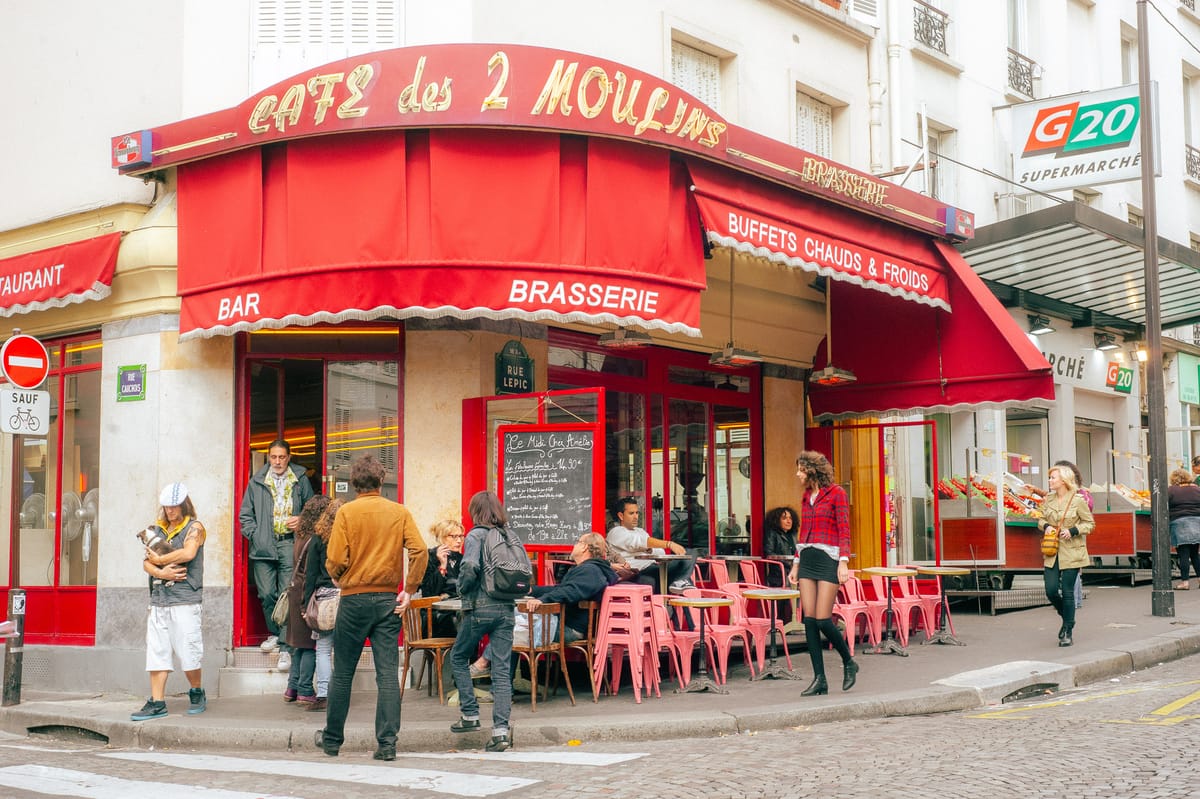
25 years ago one of my favourite movies was released. Amelie, a French film about a young woman living in Montmartre, Paris. She is a quirky, introverted and imaginative person who sets out to do good deeds for people through mischeavous means. When the film came out in 2001 I was curious to see it as I saw something of myself in Amelie. Back in 2001 I had no knowledge of neurodiversity, or that I myself was autistic. I simply saw someone who didn’t quite fit in and struggled to connect with others, someone like me.
Recently I read an article about how the main character, Amelie, was autistic. It was an interesting take on the film, but after a rewatch in the cinema I found myself disagreeing with some of their ideas.
One take was that the film sped up and added chaotic motion to the cinematography to convey a sense of autistic overstimulation. This occurred on a few occasions, the main being while Amelie was on a train. Public transport can be an issue for autistic people. There's lots of noise from the train, people talking and moving around, and occasional flashing lights from various sources. Not to mention smells. It can be a lot. But is the film trying to say that? I don't think so.
This technique is used later in the movie when Amelie is happy and excited in a less crowded space. Maybe what the film is saying is that these moments are stimulating and energetic. Depending on your energy levels they can be stimulating or over stimulating. An autistic person who is really into trains might be excited by the arrival of a train, but to journey on one might be too much chaos.
Twenty-five years ago autistic or neurodivergent people didn't exist. We're a recent invention from the people who brought you climate change. Back then people were simply weird, strange or a bit different. So the film was not likely made from an autistic perspective, with autistic people, or about autistic people. Which got me thinking. Maybe the writer of the article I read simply saw what they wanted to in the film? Which is fair enough, as art is subjective and open to interpretation.
For that reason it was interesting to rewatch the film as I hadn't seen it in about 10-15 years. And what did I see? I saw someone like myself struggling in the world, just as I did when I first saw the trailer for the film 25 years ago. Without any diagnostic framework, I just saw someone like me trying to understand people, someone written off as 'shy'. I saw a film about people stuck in their lives and trying to live them. Passing the idea that life is short on to the younger generation. I saw that in the film 25 years ago.
I found the film to be quite forward thinking about women, disability and neurodivergent people. When, Lucien, a disabled person in the film is derided by his boss, Amelie scorns the man for being cruel. When Lucien is enabled by the right people, he lights up.
Upon rewatching it I again saw someone letting their life slip through their fingers, unable to put themselves forward. After 25 years I have a better understanding of anxiety, and I saw how that affected the people in the film, how it held them back just like me 25 years ago and today. And as I sat there thinking about whether I too was seeing what I wanted to in the film, a character in the film actually says to go out and live "For Pete's sake." So maybe I should?

Links
- Amelie (2001) dir Jean-Pierre Jeunet | Autism Through Cinema. We take the whimsical streets of Paris for Jean-Pierre Jeunet's cult classic Amelie in today's episode, brought to us by our very special guest autistic film journalist Lillian Crawford. We take great pleasure in revisiting Amelie from an autistic perspective, finding neurodivergent expression in the heightened audio and visual richness of Jeunet's film.
- Four Movies with Autistic-Coded Characters | 25YL. Sometimes filmmakers portray things they don't necessarily mean to. This article explores movie characters who exhibit signs of autism.
- Embodying Amélie - by Emily Wilkinson - Wild Margins. Romancing the sensory world as a neurodiverse form of activism
- Amélie: The Most Relatable Representation of Neurodivergence on Screen | by Sarah TC | The Narrative Arc | Medium.
- Dyslexic thinking made me the scientist I am today. If we could harness its power, imagine what could be possible | Maggie Aderin. Progress has always been made by people who think differently. Neurodiversity helps us think outside the box – and when we do, the sky’s the limit, says space scientist Maggie Aderin
- Tal Anderson On The Pitt's Earnest Portrayal Of Autistic Life. Pitt actor Tal Anderson on how HBO’s medical drama is breaking Hollywood’s myth about neurodivergency and how her children’s book aims to teach kids to trust their own way of thinking
- Actress Taylor Dearden talks about portraying neurodivergence on 'The Pitt'. Actress Taylor Dearden plays a neurodivergent resident on Max's hospital drama "The Pitt." The actress talks to NPR's Scott Detrow about her portrayal.